REGISTER NOW
Registration for the upcoming Conference of Nutrition and Dietetics 2026, COND26, is open. Click on the button below to register.


Why Attend COND 2026?
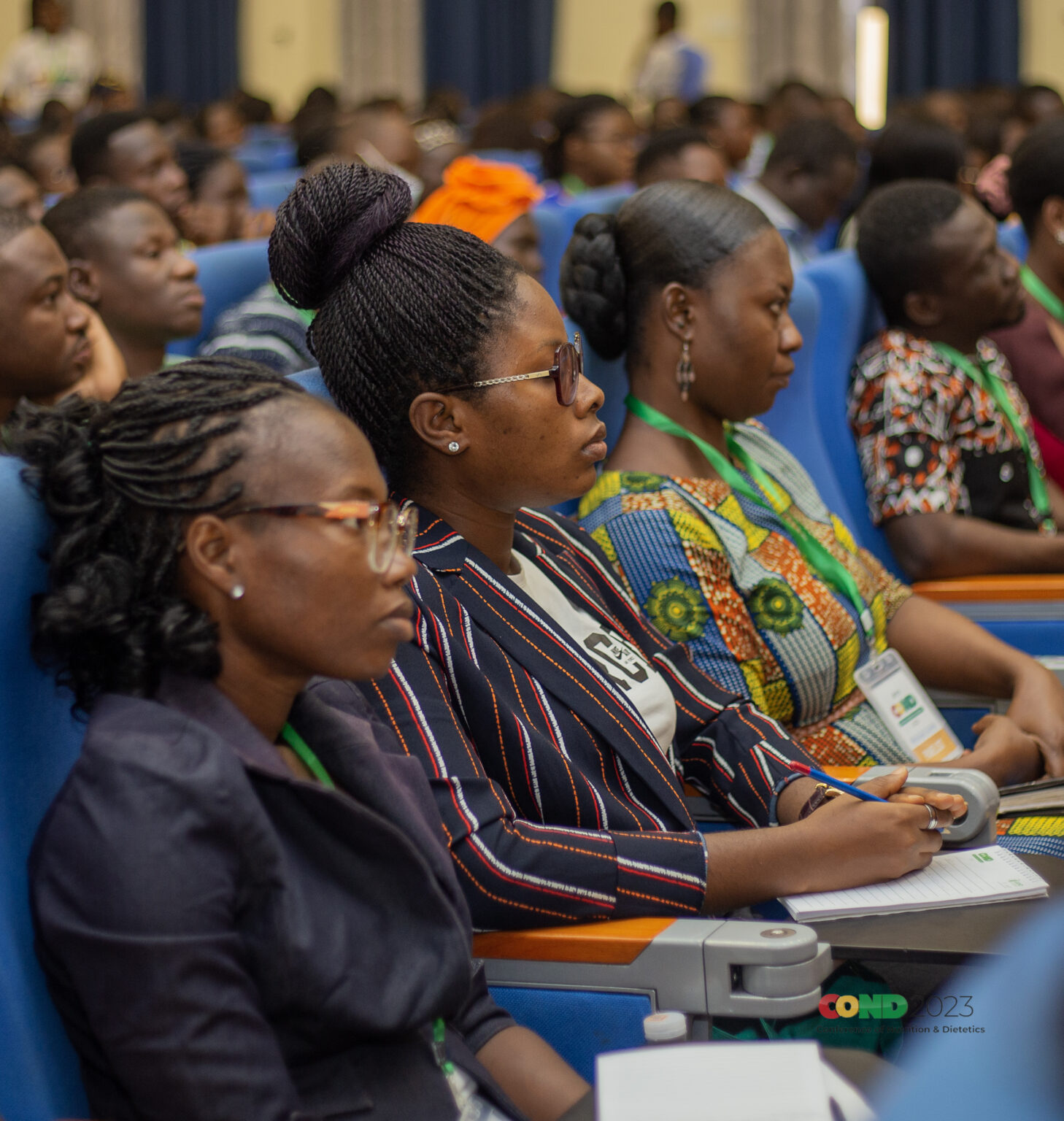
The COND Biennial Conference is Ghana’s premier gathering in nutrition and dietetics, uniting researchers, health professionals, policymakers, and industry leaders to advance national development through evidence-based nutrition science, innovative interventions, and strategic public-private partnerships. Why should one attend?
Certificate of participation
Attendees receive official recognition for their involvement in COND, acknowledging their commitment to advancing nutrition and dietetics.
Networking Opportunities
COND offers a platform to connect with fellow nutritionists, dietitians, researchers, and health professionals, fostering meaningful relationships and knowledge exchange.
Collaboration and Partnership
The conference encourages cross-sector partnerships, enabling attendees to explore joint projects, research, and community initiatives in nutrition.
Professional Development
Through expert-led sessions, workshops, and panel discussions, COND enhances participants’ skills and knowledge for career growth.
Innovative Research
COND showcases cutting-edge studies and findings, promoting evidence-based practices and inspiring new directions in nutrition science.
Overview
CURBING THE TRIPLE BURDEN OF MALNUTRITION IN AFRICA - MOBILIZING STAKEHOLDERS FOR CONCERTED EFFECTIVE ACTION
BACKGROUND/RATIONALE
Malnutrition in Africa presents a complex challenge characterized by undernutrition, micronutrient deficiencies, and overweight/obesity, collectively known as the triple burden of malnutrition. According to the latest reports from the World Health Organization, Sub-Saharan Africa bears the brunt of this crisis, with nearly 30% of children under five suffering from stunted growth, while rising obesity rates threaten the health of adults. These interlinked forms of malnutrition have profound implications for public health, economic development, and social equity.
Current approaches to combat malnutrition involve multi-sectoral strategies that engage health, agriculture, education, and social protection sectors. However, fragmented efforts often lead to insufficient impact. There is an urgent need for a cohesive platform to mobilize stakeholders, share best practices, and formulate actionable strategies to effectively address the triple burden of malnutrition.
- Objectives
- Foster Multi-Sectorial Collaboration:
To create a collaborative environment that brings together government officials and agencies, Non-Governmental Organization, international and multi-national agencies, health professionals, researchers, and community leaders, facilitating the sharing of knowledge and experiences to enhance current strategies aimed at reducing malnutrition.
- Develop on Evidence-Based Management and Policy Recommendations:
To engage participants in a series of workshops aimed at generating actionable, evidence-based policy recommendations that address the various forms of malnutrition and are adaptable to local contexts.
- Strengthen Community Engagement:
To explore innovative community-based approaches, emphasizing the role of local stakeholders in the design and implementation of nutrition interventions that are culturally relevant and sustainable. - Enhance Capacity Building:
To identify training needs and develop capacity-building programs for nutrition and other health care professionals, and stakeholders involved in nutrition, equipping them with the skills and knowledge necessary to implement effective interventions at local and national levels.